The Role of Minimization Software in Streamlining Operations

Dacima Software specializes in innovative clinical research solutions, providing cutting-edge technology tailored to streamline data management and analysis in the medical field. With a focus on user-friendly interfaces and robust functionalities, Dacima empowers researchers worldwide to efficiently collect, manage, and analyze data, driving advancements in healthcare.
In today's fast-paced digital landscape, the demand for efficiency and productivity has never been higher. As businesses grapple with increasing workloads and the pressure to perform optimally, the adoption of various tools and technologies has become essential. Among these tools, minimization software has emerged as a key player, offering solutions that streamline processes and reduce resource usage. This software is designed to help organizations analyze their operations and identify areas where resources can be conserved or optimized.
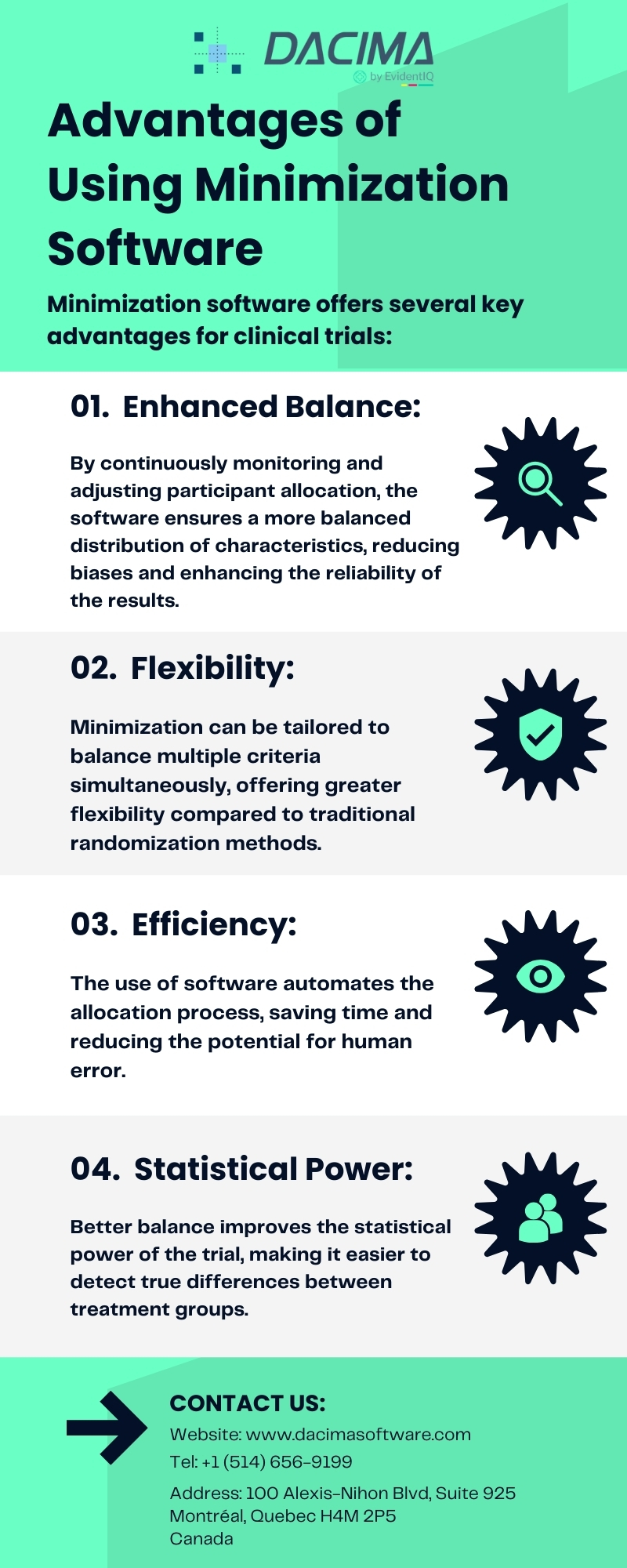
It employs advanced algorithms and analytics to assess existing workflows, identifying redundancies and inefficiencies that may go unnoticed in traditional assessments. By providing a comprehensive view of operational processes, it allows organizations to pinpoint specific areas where changes can be made. This capability is particularly valuable in sectors where resource management is critical, such as manufacturing, logistics, and even service industries.
One of the primary benefits of this software is its ability to facilitate better decision-making. By presenting data in an accessible manner, It enables managers and stakeholders to visualize potential improvements. The software can generate reports and analytics that detail how resources are currently being used and where savings can be achieved. These insights empower organizations to make informed decisions, leading to enhanced productivity and lower operational costs.
Moreover, It can help organizations adapt to fluctuating market demands. In an era where agility is paramount, businesses must be able to pivot quickly in response to changing conditions. By utilizing this software, organizations can assess their capacity and resources in real-time, allowing them to adjust their operations swiftly. This flexibility is crucial for maintaining competitiveness in a landscape where customer expectations are continually evolving.
The implementation of minimization software also fosters a culture of continuous improvement. By encouraging teams to regularly assess and optimize their workflows, organizations can cultivate an environment that values efficiency and innovation. Employees are more likely to engage in identifying potential improvements when they have access to the right tools and data. This collaborative approach not only enhances individual performance but also contributes to the overall success of the organization.
Furthermore, the integration of minimization software into existing systems can be seamless. Many solutions are designed to work alongside popular enterprise resource planning (ERP) and customer relationship management (CRM) systems. This compatibility ensures that organizations can enhance their capabilities without overhauling their entire technology infrastructure. Such an approach minimizes disruption and allows businesses to leverage their current investments while still benefiting from the efficiencies offered by the software.
As organizations begin to recognize the importance of sustainability, It plays a vital role in supporting green initiatives. By optimizing resource usage, businesses can reduce waste and lower their carbon footprints. This not only contributes to environmental sustainability but can also enhance a company's reputation in an increasingly eco-conscious marketplace. Organizations that prioritize sustainability are more likely to attract customers and talent who value corporate responsibility.
Data security is another crucial aspect of these software. As organizations digitize their operations, they must also prioritize the protection of sensitive information. Leading minimization software solutions incorporate robust security measures to safeguard data. This includes encryption, access controls, and regular security updates, ensuring that organizations can confidently utilize these tools without compromising their data integrity.
In addition to operational efficiency, it can significantly impact financial performance. By identifying cost-saving opportunities and optimizing resource allocation, organizations can enhance their profit margins. The ability to reduce unnecessary expenditures while maintaining or improving productivity creates a more resilient financial position. This is particularly important for small and medium-sized enterprises (SMEs), which often operate with tighter budgets and need to maximize every dollar spent.
Employee satisfaction is another indirect benefit of implementing it. When workflows are optimized and resources are used effectively, employees can focus on higher-value tasks rather than getting bogged down by inefficiencies. This can lead to increased job satisfaction, as team members feel their time is being spent productively. A motivated workforce is essential for driving innovation and maintaining a competitive edge in any industry.
Another essential aspect of minimization software is its role in project management. Many solutions provide tools for tracking progress and resource allocation in real time. This feature enables project managers to oversee multiple projects simultaneously, ensuring that resources are allocated effectively across various initiatives. By maintaining a clear view of project statuses and resource usage, managers can avoid common pitfalls such as project delays or budget overruns.
In the realm of manufacturing, it can significantly impact production efficiency. By analyzing production lines and workflows, the software can identify bottlenecks and suggest improvements. This leads to smoother operations, reduced lead times, and ultimately, a better ability to meet customer demands. The ability to produce more with less can be a game-changer in an industry where margins can be tight.
Moreover, the benefits of minimization software extend beyond internal operations. It can also enhance supply chain management. By providing insights into inventory levels, order statuses, and supplier performance, the software allows organizations to optimize their supply chains. This not only improves efficiency but can also lead to stronger relationships with suppliers, as organizations can more accurately forecast needs and manage expectations.
Training and support are critical factors to consider when implementing it. Organizations must ensure that their teams are adequately trained to utilize the software effectively. This can involve formal training sessions, online tutorials, or ongoing support from software providers. The more proficient employees become with the tool, the more likely they are to leverage its full potential to drive improvements within the organization.
Customization options also play a vital role in the effectiveness of minimization software. Organizations operate in diverse environments and industries, each with unique challenges and requirements. Many software solutions offer customizable features, allowing businesses to tailor the software to their specific needs. This adaptability ensures that organizations can maximize the value they derive from the software, aligning it closely with their operational goals.
The adoption of minimization software can transform the way organizations operate. By streamlining processes, optimizing resource usage, and fostering a culture of continuous improvement, businesses can enhance their efficiency and performance. As the demand for agility and sustainability grows, the importance of such tools will only increase. By leveraging data and analytics, organizations can make informed decisions that lead to better outcomes. Ultimately, the implementation of it represents a strategic investment in an organization’s future, enabling it to thrive in a competitive and ever-changing landscape.


